
Neurofeedback and Biofeedback Therapy
Neurofeedback therapy is a modern method that uses technology to help individuals improve brain function, enhance cognitive abilities, and achieve greater emotional balance. The therapy is based on monitoring the brain’s electrical activity and providing patients with real-time feedback, allowing them to learn how to regulate their brain activity more effectively.
The goal of the therapy is not only to reduce symptoms, but also to achieve lasting improvements in brain function through self-regulation. This method helps the brain recognize and modify its own activity patterns, enabling it to respond more effectively to stress and other external influences.
What Is Neurofeedback Therapy Used For?
This therapy has a wide range of applications and is used to treat various conditions, including:
- Attention-deficit/hyperactivity disorder (ADHD)
- Anxiety and depression
- Sleep disorders, including insomnia and difficulty falling asleep
- Migraines and tension headaches
- Post-traumatic stress disorder (PTSD)
- Rehabilitation after a stroke or brain injury
- Reducing dependence on psychoactive substances, including alcohol, medications, and illicit drugs
In addition to treating specific conditions, neurofeedback therapy is becoming increasingly popular among healthy individuals who want to improve their mental performance, concentration, and resilience to stress. Athletes, executives, and public figures use this method to sharpen their focus and enhance their performance in everyday life.
How Does the Therapy Work?
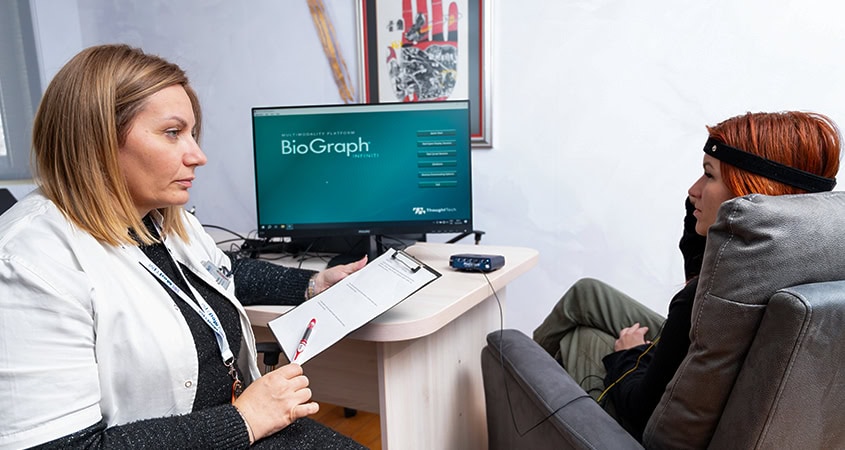
During each session, sensors are placed on the patient’s scalp to measure brainwave activity, while real-time feedback is provided through a computer display. For example, the patient may watch a video game that responds to their brain activity. When the brainwaves remain within the desired range, the game progresses. When they fall outside that range, the game pauses, giving the brain an opportunity to adjust its activity. This learning process takes place at a subconscious level, and the results become increasingly long-lasting with repeated training sessions.
What Is Neurofeedback?
Neurofeedback, also known as EEG biofeedback, is a technique that uses sensors placed on the scalp to monitor brain activity and provide real-time feedback. Using electroencephalography (EEG), patients can gain insight into their own brainwave patterns and learn how to consciously regulate them in order to achieve an optimal mental state.
This method enables the brain to recognize and adjust its own activity patterns through a learning process. Feedback is usually presented visually, through video games or graphic displays on a screen. When the brain reaches the desired state, the patient receives a reward, such as the game continuing or the image on the screen changing, thereby reinforcing the desired brain activity.
Types of Brainwaves and Their Functions
The brain produces different types of brainwaves, each of which plays a specific role:
- Delta waves (0.5–4 Hz): Associated with deep sleep and physical restoration.
- Theta waves (4–8 Hz): Dominant during relaxation, creative thinking, and the early stages of sleep.
- Alpha waves (8–12 Hz): Present during calm wakefulness and mental relaxation.
- Beta waves (12–30 Hz): Responsible for focus, attention, and problem-solving.
- Gamma waves (30+ Hz): Associated with higher cognitive processes, such as learning and the integration of information.
In individuals who experience difficulties with concentration, anxiety, or sleep disorders, brainwave activity is often imbalanced. Neurofeedback helps the brain restore this balance through training, guiding brainwave patterns toward more optimal levels of activity.
Goals of Neurofeedback Therapy
Modern life presents numerous challenges, ranging from everyday stress and anxiety to difficulties with concentration and sleep. Neurofeedback therapy offers an effective and natural way to improve mental and cognitive functioning, achieve greater emotional stability, and develop stronger self-regulation skills. The goal of the therapy is not merely to provide temporary relief from symptoms, but to enhance brain function through a process of adaptation and learning.
Through neurofeedback training, patients become more aware of their brainwave patterns and learn how to consciously modify them to achieve an optimal state of mind. This can lead to improvements in everyday functioning, including better concentration, more effective stress management, and greater emotional resilience. The therapy is often used as part of a comprehensive approach to treating various conditions, as well as a tool for enhancing performance in healthy individuals.
Our professional team is available for consultations about the available treatment programs.
Key Goals of Neurofeedback Therapy:
- Improving attention and concentration – particularly in children and adults with attention-deficit/hyperactivity disorder (ADHD).
- Reducing stress and anxiety – helping individuals develop better self-regulation and greater emotional stability.
- Improving sleep quality – for people who experience insomnia or other sleep disorders.
- Regulating mood and promoting emotional stability – for individuals dealing with depression or frequent mood swings.
- Enhancing cognitive abilities – including memory, planning, and problem-solving skills.
One of the key benefits of neurofeedback therapy is that, through repeated training, patients develop lasting self-regulation skills. These skills become automatic and remain in place even after therapy has ended, reducing the need for medication in many cases.
The Neurofeedback Therapy Process – What to Expect
Neurofeedback therapy begins with an initial assessment designed to identify the patient’s specific needs and establish a personalized treatment plan. The process is tailored to each individual based on their symptoms, treatment goals, and current patterns of brain activity.
1.First Step – Initial Assessment and Brain Mapping
The first step is brain mapping using quantitative electroencephalography (qEEG). During this process, electrical activity is measured in different regions of the brain to identify areas of imbalance. This brain map gives the therapist detailed insight into the patient’s brainwave patterns and allows for the development of a personalized treatment plan.
For example, individuals with anxiety often show excessive beta-wave activity, while those who experience insomnia may have insufficient alpha-wave activity needed for relaxation. Based on these findings, the specific areas of the brain to be targeted during the sessions are identified.
2.The Therapy Session Process
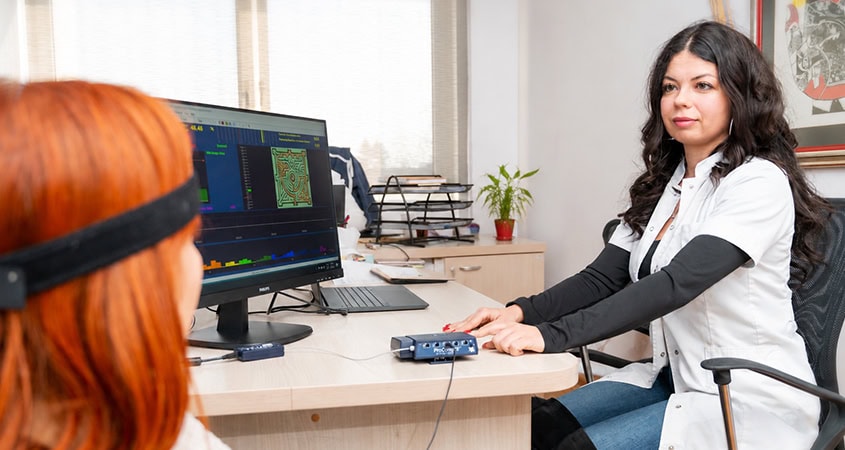
During each session, the patient sits comfortably in a chair while sensors are placed on their scalp to monitor brain activity. These sensors do not emit electrical impulses; they only record the brain’s activity. Feedback is then presented to the patient on a computer screen, usually through visual displays, video games, or graphs.
When the brainwaves remain within the desired range, the patient receives a “reward” – the video game progresses, the image becomes clearer, or the music sounds more pleasant.
When brain activity is not optimal, the feedback prompts the brain to adjust its activity. In this way, the brain gradually “learns” how to organize and function more effectively.
Each session lasts between 30 and 40 minutes, and most patients describe the treatment as pleasant and relaxing. For children, the therapy is often presented in the form of a game, making it enjoyable and easy to engage with.
3.Number of Sessions Required
The duration of therapy depends on the condition being treated and the patient’s individual progress. On average, between 20 and 40 sessions are required to achieve the desired results. Sessions are typically held two to three times per week.
Initial improvements may be noticeable after just 5 to 10 sessions, but completing the full course of treatment is recommended to achieve longer-lasting results. More complex conditions, such as neurological damage, may require extended treatment and additional therapy cycles.
4.Monitoring Progress
Throughout the treatment process, the patient’s progress is regularly monitored and documented. Based on the feedback collected during each session, the therapist can adjust the treatment to further optimize the results. In many cases, progress includes improved sleep quality, reduced anxiety, better concentration, and greater emotional stability.
Effectiveness and Applications of Neurofeedback Therapy
Neurofeedback therapy is supported by a growing body of research demonstrating its effectiveness in treating a range of psychological and neurological conditions. Unlike conventional therapies, which often rely on medication, neurofeedback offers a natural way to improve brain function through training and learning. Its effects can be long-lasting because the brain “learns” to maintain more optimal patterns of activity even after treatment has ended.
Proven Benefits of Neurofeedback Therapy
Neurofeedback has been shown to be particularly effective in treating the following conditions:
- Attention-deficit/hyperactivity disorder (ADHD):Research suggests that 80–90% of patients with ADHD experience significant improvements in attention and reduced impulsive behavior after 20–40 sessions. This therapy may serve as an effective alternative or complement to medication-based treatment.
- Anxiety and stress:Neurofeedback helps patients develop greater control over their responses to stress by reducing excessive beta-wave activity associated with anxiety. Regular sessions may lead to a greater sense of calm and improved emotional resilience.
- Depression and mood disorders:The therapy focuses on increasing alpha- and beta-wave activity in specific regions of the brain, helping to regulate mood. Patients often report improvements after only a few sessions.
- Migraines and headaches:In patients with chronic migraines, neurofeedback may reduce the frequency and intensity of headaches. The therapy helps regulate brain activity and reduce stress, which is often a trigger for migraines.
- Sleep disorders:People with insomnia or difficulty falling asleep may benefit significantly from this therapy. Neurofeedback helps restore the balance between alpha and theta waves, promoting natural relaxation and making it easier to fall asleep.
Our team is available to provide consultations about treatment programs.
Applications for Specific Populations
- Children:Neurofeedback is particularly beneficial for children with learning difficulties, ADHD, dyslexia, and autism. The learning process uses visual feedback, making it engaging and enjoyable, while the results are often long-lasting.
- Athletes:Elite athletes use neurofeedback to improve focus, reduce performance anxiety, and enhance mental endurance.
- Managers and executives:People exposed to high levels of workplace stress use this therapy to improve concentration, decision-making skills, and resilience to stress.
Long-Term Results and Scientific Evidence
Numerous studies indicate that the positive effects of neurofeedback therapy can be long-lasting, particularly in patients who complete the full recommended course of treatment. Unlike medication, which often provides temporary relief, neurofeedback aims to produce lasting changes in the way the brain functions. Studies suggest that patients may continue to experience improvements for years after completing therapy.
What Is Biofeedback?
Biofeedback is a technique that enables individuals to learn how to control various physiological functions of the body with the help of real-time feedback. Unlike neurofeedback, which focuses exclusively on brainwave activity, biofeedback covers a wide range of bodily functions, including breathing, heart rate, muscle activity, body temperature, and the electrical activity of the skin.
This method helps patients become more aware of their physical responses and learn how to consciously modify them to improve their health and gain greater control over stress and tension. The goal of biofeedback is to promote self-regulation and achieve a better balance between physiological and mental functions.
How Does Biofeedback Work?
During treatment, the patient is connected to sensors that measure physiological functions. Feedback is displayed on a computer screen or provided through audio signals. For example, when practicing breathing techniques, the patient may see a visual representation of their breathing rhythm on the screen and learn how to align it with an optimal pattern.
This process helps patients recognize when they are under stress and apply the techniques they have learned to reduce stress responses and return the body to a relaxed state.
Common Types of Biofeedback
- EMG (electromyography): Monitors muscle activity and is useful for reducing tension and managing chronic pain.
- BVP-HRV (blood volume pulse and heart rate variability): Used to reduce stress and anxiety and help regulate blood pressure.
- RESP (respiration): Measures the depth and rhythm of breathing and can help with anxiety and panic attacks.
- GSR (galvanic skin response): Monitors sweat gland activity and is used to identify stress responses.
- Temperature: Measures peripheral circulation and can be useful in treating migraines and stress-related conditions.
Benefits of Biofeedback Therapy
Biofeedback therapy is non-invasive, safe, and adaptable to each patient’s individual needs. It is most commonly used to:
- Managing stress and anxiety
- Improving sleep quality
- Regulating blood pressure
- Reducing the frequency of migraines
- Managing chronic pain
This therapy is often used alongside conventional treatment methods and helps patients become active participants in improving their own health.
Cost of Neurofeedback and Biofeedback Therapy
The cost of neurofeedback and biofeedback therapy depends on the patient’s individual needs, the recommended number of sessions, and the overall duration of treatment. A course of 20 sessions is usually recommended, with two to three treatments per week. Prices may vary depending on the center’s equipment, the therapist’s experience, and any additional services provided.
For accurate information about pricing and available treatment packages, please contact us.
Who Is Neurofeedback and Biofeedback Therapy For?
Neurofeedback and biofeedback therapies are suitable for a wide range of people, but they can be particularly beneficial for individuals experiencing psychological disorders and those undergoing treatment for addiction. These therapies offer a safe, non-invasive, and effective way to gain greater control over emotions and physical responses, which can be a key factor in the recovery process.
People with Mental Health Conditions
For individuals struggling with anxiety, depression, post-traumatic stress disorder (PTSD), and mood disorders, neurofeedback and biofeedback offer the potential for lasting improvements in mental health. These therapies help patients:
- Reduce the intensity and frequency of anxiety episodes
- Regulate emotional responses more effectively
- Improve sleep and overall daily functioning
- Increase self-confidence and gain a greater sense of control over their condition
When used alongside psychotherapy and medication-based treatment, these methods enable patients to take an active role in their own recovery, significantly increasing the likelihood of long-term success.
People Undergoing Addiction Treatment
Neurofeedback and biofeedback have proven to be highly beneficial for individuals undergoing treatment for alcohol, opioid, stimulant, and medication dependence. Addiction often disrupts normal brain activity, making it difficult to regain stability even after substance use has stopped. These therapies can help with:
- Regulating brain activity disrupted by long-term use of psychoactive substances
- Reducing cravings for substances
- Increasing tolerance to stress, which is a key factor in relapse prevention
- Improving cognitive function and emotional stability
Neurofeedback is used to establish healthier patterns of brain activity, while biofeedback helps reduce physiological stress and improve control over the body’s responses in stressful situations.
Integrated Therapy for Greater Success
For individuals undergoing treatment for mental health conditions or addiction, combining neurofeedback and biofeedback with psychotherapy provides a holistic approach. The goal is not only to alleviate symptoms, but also to strengthen emotional resilience and self-confidence over the long term. Many rehabilitation and addiction treatment centers already incorporate these methods into their standard treatment protocols.
Integrated Approach – When Should Neurofeedback and Biofeedback Be Combined?
Combining neurofeedback and biofeedback therapy provides a comprehensive approach that targets both brain function and the body’s physiological responses. This integrated approach is particularly effective for individuals with complex conditions, such as chronic stress, mental health disorders, and addiction.
The goal of this approach is to establish a balance between mental and physical health, leading to lasting changes in the way the brain and body respond to external stimuli. While neurofeedback helps regulate brain activity, biofeedback enables greater control over bodily functions such as breathing, heart rate, and stress responses.
When Is a Combination of Therapies Recommended?
Integrated treatment is ideal for:
- Individuals with attention-deficit/hyperactivity disorder (ADHD) – combining the two therapies can improve attention, reduce impulsivity, and relieve physical tension.
- Patients with anxiety and depression – neurofeedback helps regulate brainwave patterns, while biofeedback improves control over physiological stress responses, such as an increased heart rate and shallow breathing.
- Individuals undergoing addiction treatment – biofeedback helps reduce physiological tension and substance cravings, while neurofeedback supports the stabilization of brain function.
- Athletes and executives – improved cognitive flexibility and resilience to stress can support better decision-making and greater mental endurance.
Benefits of an Integrated Approach
- Faster and more effective results: The synergy between these two methods can lead to faster and longer-lasting improvements.
- Personalized treatment: Each treatment plan is tailored to the patient’s specific needs, allowing the therapy to focus on the areas that matter most.
- Relapse prevention: For individuals undergoing addiction treatment, an integrated approach can significantly reduce the risk of returning to old habits.
- A holistic approach: It supports overall well-being by not only reducing symptoms, but also improving quality of life.
Safety and Scientific Basis of the Therapies
Neurofeedback and biofeedback are safe, non-invasive, and well-researched therapies used worldwide in medical and therapeutic settings. Unlike pharmacological treatments, these therapies do not involve medication-related side effects and rely on the brain’s and body’s natural ability to adapt and learn through feedback.
Why Are These Methods Safe?
- Non-invasive approach: During treatment, sensors are used solely to monitor brain or physiological activity – no substances are introduced into the body.
- No electrical stimulation: The sensors do not deliver electrical currents or impulses; they only record brain and bodily activity.
- A comfortable experience: Most patients describe the therapy as relaxing and enjoyable, particularly neurofeedback, which often uses visual games and videos.
Scientific Evidence
These methods have a long history of research, particularly in the fields of neurology and applied psychophysiology. Numerous clinical studies support their effectiveness in treating attention-deficit/hyperactivity disorder (ADHD), anxiety, depression, migraines, and sleep disorders.
- Research on ADHD: Studies show that neurofeedback therapy can significantly improve attention and reduce hyperactivity in both children and adults, with benefits that may persist for years after treatment has ended.
- Use in anxiety disorders: Neurofeedback helps reduce excessive beta-wave activity associated with stress and anxiety, while biofeedback enables better control over the body’s physiological responses.
- Use in addiction treatment: These therapies are used as part of comprehensive rehabilitation programs to help stabilize brain activity and reduce the risk of relapse.
Many medical centers around the world already use neurofeedback and biofeedback as part of their standard treatment protocols for psychological and neurological conditions.
How Long Does Therapy Last, and When Can Results Be Expected?
The duration of neurofeedback and biofeedback therapy depends on the patient’s specific needs, the nature of the condition being treated, and the goals of therapy. Although initial improvements are often noticeable after just a few sessions, achieving long-lasting and stable results requires completing the full recommended course of treatment.
Duration and Frequency of Treatment
- An average course of therapy consists of 20 to 40 sessions, usually held two to three times per week.
- Each session lasts between 30 and 40 minutes.
- More complex conditions, such as neurological injuries, autism spectrum disorders, and addiction, may require extended treatment with additional therapy cycles.
Expected Results
- Initial effects: After just 5–10 sessions, patients typically begin to notice improvements in concentration and sleep quality, as well as reduced anxiety.
- Long-term changes: Completing the full course of therapy is recommended to achieve lasting results. As the brain and body adapt, more enduring changes can occur in brainwave patterns and physiological responses.
- Addiction and chronic conditions: Longer-term therapy can help stabilize brain activity and reduce the risk of returning to previous dysfunctional patterns.
Factors That Influence the Rate of Progress
- Individual response to therapy – some patients respond more quickly, while others progress more gradually.
- Complexity of the condition being treated – milder conditions generally require a shorter course of treatment, while chronic conditions may require extended therapy cycles.
- Consistency – attending sessions regularly and following the therapist’s recommendations are essential for achieving optimal results.
The Future of Neurofeedback Therapy
Given the growing interest in holistic and non-invasive treatment methods, neurofeedback therapy has the potential to become a standard part of care in mental health, neurology, and rehabilitation. Advances in technology will allow for even more precise assessment and a more personalized approach to treatment.
In the future, neurofeedback is expected to be used more widely across a range of fields:
- Sports performance: An increasing number of professional athletes use this therapy to improve focus, manage stress, and support faster recovery.
- Cognitive enhancement in healthy individuals: Neurofeedback is used to increase productivity, improve memory, and support better decision-making.
- Prevention of mental health conditions: Regular use may help protect mental well-being, particularly in individuals exposed to ongoing stress.
- Rehabilitation after brain injury and stroke: Further development of this method could contribute to faster and more effective recovery.
As part of an integrated approach, neurofeedback and biofeedback will play a key role in improving patients’ overall well-being and quality of life.
Scheduling Your Initial Consultation
If you believe that neurofeedback or biofeedback therapy could be beneficial for you, please contact our team of specialists. The initial assessment includes a consultation with a therapist and brain activity mapping, after which a personalized treatment plan is developed.
Take the first step toward better mental health today!
Reviewed by the MedTiM clinical team for medical accuracy.